When Your Parent Gets Sick, the ER Shouldn’t Be the Default
A sick parent at night doesn't always mean the ER. Dr. Ian Leber, emergency physician, on when urgent home care is the safer, faster first step.
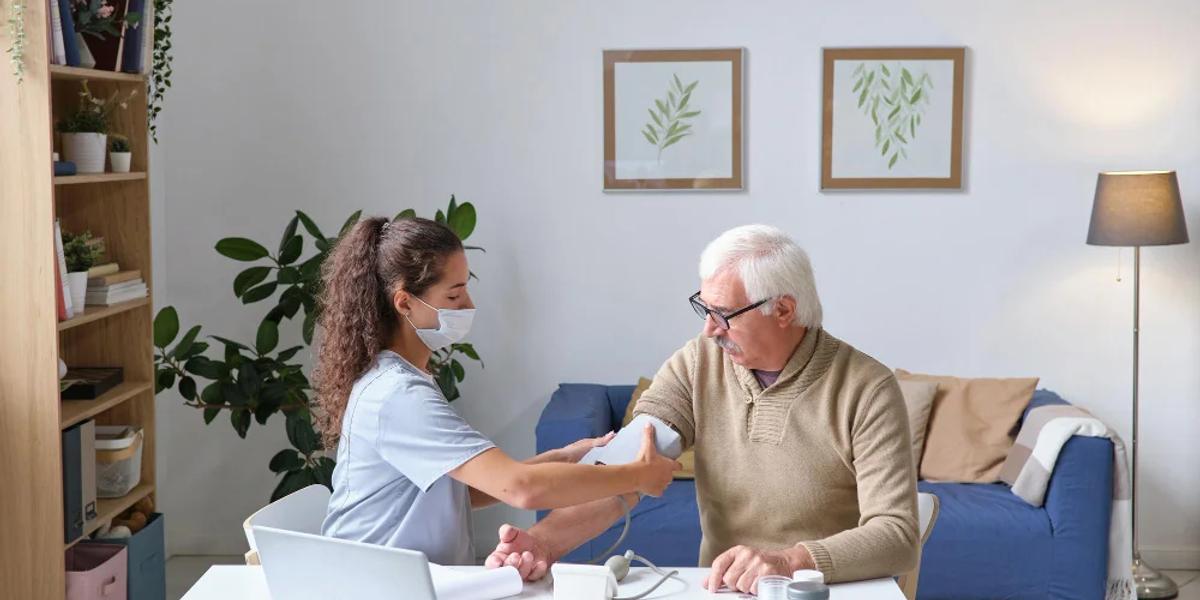
For many urgent situations, there’s a smarter first step — and it often starts at home.
It always happens at the worst time.
A fever at 9:30 p.m. A cough that suddenly sounds deeper than it should. A fall that might be nothing — or might not. You call your parent and you can hear it immediately: something is off.
And then comes the familiar spiral: Do we go to urgent care? Do we sit in an ER for six hours? What if it gets worse overnight?
For years, the ER became the default for these moments — not because it’s always appropriate, but because it’s the only option that feels immediate. The problem is that “immediate” doesn’t always mean “best.”
The truth: many urgent situations are real — but not emergent. They need clinical evaluation quickly. But they don’t necessarily need a hospital.
The broken middle in American healthcare
Most of the system is built around extremes:
- Emergencies: 911 / ER
- Everything else: wait for your primary care doctor
But aging parents don’t live in extremes. They live in the middle — a steady stream of symptoms that are urgent enough to be stressful, but not life-threatening.
Dehydration. Flu. A suspected UTI. Weakness and dizziness. Medication side effects. A fall without obvious head injury. A breathing change that may be mild but concerning.
These situations often don’t need a hospital — but they do need a real evaluation.
And when families don’t have access to that middle layer, they fall back on the only place open: the ER.
Why the ER can be the wrong default (especially for seniors)
Emergency rooms are extraordinary when you’re truly in danger. But they are not designed for nuance. They’re designed to prioritize life-threatening cases first — and move everyone else through as efficiently as possible.
For older adults, that environment can come with real downsides:
- prolonged wait times (and dehydration, anxiety, confusion)
- exposure to contagious illness
- rushed assessments
- unnecessary tests “just to be safe”
- fragmented care (no one knows the patient)
Often, the biggest cost isn’t even the bill. It’s the loss of control — the feeling that once you enter the ER system, you’re no longer steering the situation.
The better question: “Does this require a hospital?”
Instead of “Should we go to the ER?”, a better question is:
Does this require hospital-level care — or just physician-level care?
This is the distinction most families don’t get taught.
Hospital-level care is for emergencies: chest pain, stroke symptoms, severe breathing distress, uncontrolled bleeding, major trauma.
Physician-level urgent care is different. It’s: “I need someone trained to evaluate this properly tonight, but I don’t need an ER.”
That physician-level care can happen in different ways:
- virtual evaluation
- in-clinic urgent care
- and increasingly: in-home urgent medical visits
The rise of urgent care at home
A quiet shift is happening in modern healthcare: a return to something that used to be normal — the doctor coming to the patient.
For families caring for aging parents, the value is obvious:
- seniors are safer and calmer at home
- clinical evaluation can happen without travel stress
- families can participate and communicate clearly
- escalation decisions are made thoughtfully (not in panic)
Most importantly: in-home urgent care restores what families want most in stressful health moments — clarity.
When an in-home urgent visit makes sense
Home-based urgent care isn’t for everything. But it can be an ideal first step when:
- symptoms are urgent but not life-threatening
- getting your parent out of the home is difficult
- you want real evaluation (not guesswork)
- you want to avoid ER exposure when possible
- you need help deciding what to monitor vs escalate
The goal isn’t to avoid the ER at all costs. It’s to use the ER for what it was built for — and not as a substitute for access.
A simple safety rule: “Is this 911-level?”
If the answer is yes — don’t hesitate. Call 911.
This includes:
- chest pain
- severe breathing difficulty
- facial droop, slurred speech, weakness (stroke signs)
- major fall with head injury or loss of consciousness
- uncontrolled bleeding
- seizure
But if your gut says “this is serious, but not emergency”, that’s the gray zone — and where families deserve better options.
The new luxury isn’t indulgence — it’s access
We live in a world where almost everything can arrive on demand. Yet healthcare still asks families to accept stress and waiting as normal.
When it comes to aging parents, the most valuable upgrade isn’t comfort. It’s access — the ability to reach a qualified clinician quickly, without turning the night into a hospital event.
If you’re caring for a parent in NJ, have a plan before the panic
Most families don’t create a plan until the first crisis. But the best time to decide what you’ll do is before you’re exhausted at 11:00 p.m. Googling symptoms.
If you want a safer alternative to urgent care waiting rooms, you can start with:
- a virtual urgent consult, or
- an urgent physician house call (for non-emergency urgent needs)
Keep an option saved — just in case.
For emergencies, call 911.
About the author: This article was written by Ian B. Leber, MD, MBA, CPE, FACEP, a board-certified emergency physician based in New Jersey. He is the CEO and co-founder of Concierge MD STAT, a physician-led urgent care practice providing in-home urgent medical visits and virtual urgent care for NJ families who want fast clinical evaluation without unnecessary ER exposure.
→Learn more about Dr. Ian Leber and how he can help you and your family. Click here
If you’d like practical guidance on how to prepare ahead of time — what symptoms are red flags, what can wait, and how to create a plan before a crisis happens — Dr. Ian Leber (Emergency Medicine) is hosting a free webinar on this exact topic.
Caring for a sick parent is already emotionally heavy. Having a clearer roadmap for urgent health situations can make those moments feel just a little less overwhelming.
You’re not alone in this. ❤️